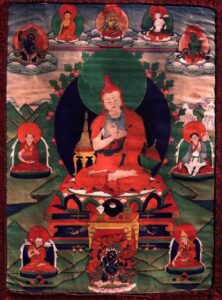
Courtesy of Himalayan Art Resources
The Seven-Point Mind Training
A famous Tibetan mind training teaching in the form of concise and practical instructions
The Seven-Point Mind Training, in Tibetan བློ་སྦྱོངས་དོན་བདུན་མ་, lojong dön dünma, is one of the most famous Tibetan Buddhist texts on mind training, containing concise and practical instructions for developing bodhicitta. These instructions were brought to Tibet by Jowo Je Atisha and later compiled by Geshe Chekawa.
This teaching provides specific methods for transforming everyday challenges and adversity into opportunities for spiritual growth and awakening. The teaching is designed to be applicable in everyday life. It offers systematic techniques for recognizing and gradually transforming negative mental patterns, emotions, and attitudes into positive qualities such as compassion, equanimity, and wisdom. The practice specifically focuses on ego-clinging and self-centred attitudes, which in Buddhist thought are considered the root cause of suffering. In addition to cultivating compassion, it also emphasizes the importance of understanding emptiness and the nature of mind.
Jowo Je Atisha
Atiśa Dīpaṃkara Śrījñāna (982–1054) was a great Indian Buddhist master and scholar, one of the principal teachers of the famous Vikramashila University. He wrote many treatises, including the well-known text Lamp for the Path to Enlightenment. He spent the last ten years of his life in Tibet, where he taught and translated Buddhist texts. His students founded the Kadampa school.
The Czech translation of this text can be found here. The English translation is available here.
A Clear Mirror of Cause and Effect
A concise and clear text explaining the law of karma
"A Clear Mirror of Cause and Effect" was written by the 7th Sakya throne holder Drogön Chögyal Phagpa in 1258 at the request of Crown Prince Jingim, son of Emperor Kublai Khan of the Yuan dynasty. This text serves as an introduction to the law of karma and explains what consequences actions have and how they can affect us in this and future lives. By understanding how actions influence our lives, we can consciously cultivate positive actions and avoid harmful ones – which the author likens to stepping onto a comfortable road and avoiding the road to a precipice. Moreover, by understanding that relative reality is the interdependence of causes and effects, we also come to understand the true nature of reality beyond conceptual constructs.
Drogön Chögyal Phagpa
Drogön Chögyal Phagpa (1235–1280) was the fifth of the five patriarchs or founders of the Sakya tradition, a great scholar and siddha who spread the Buddha's teachings in Mongolia, China, and Tibet. During his lifetime he wrote many of his own treatises, commentaries on sutras and tantras, a great number of letters with answers to questions, and many pieces of advice, praises, and prayers. He was the guru of Kublai Khan, ruler of the Mongol Empire and founder of the Chinese Yuan dynasty. He also became the first viceroy of Tibet.
The Czech translation of this text can be found here.
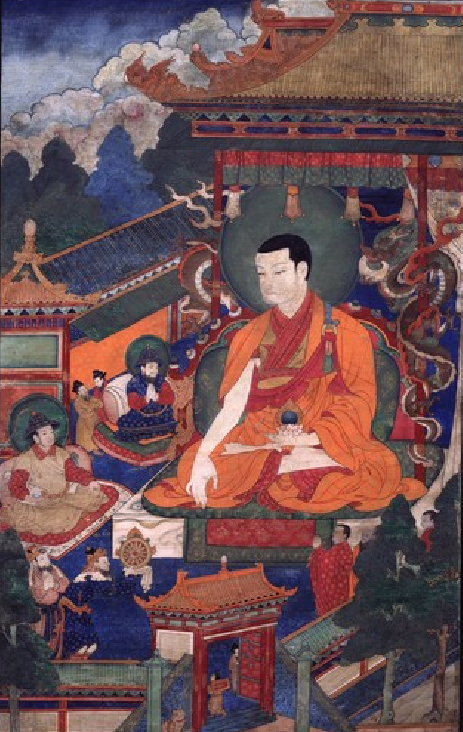
Courtesy of Himalayan Art Resources
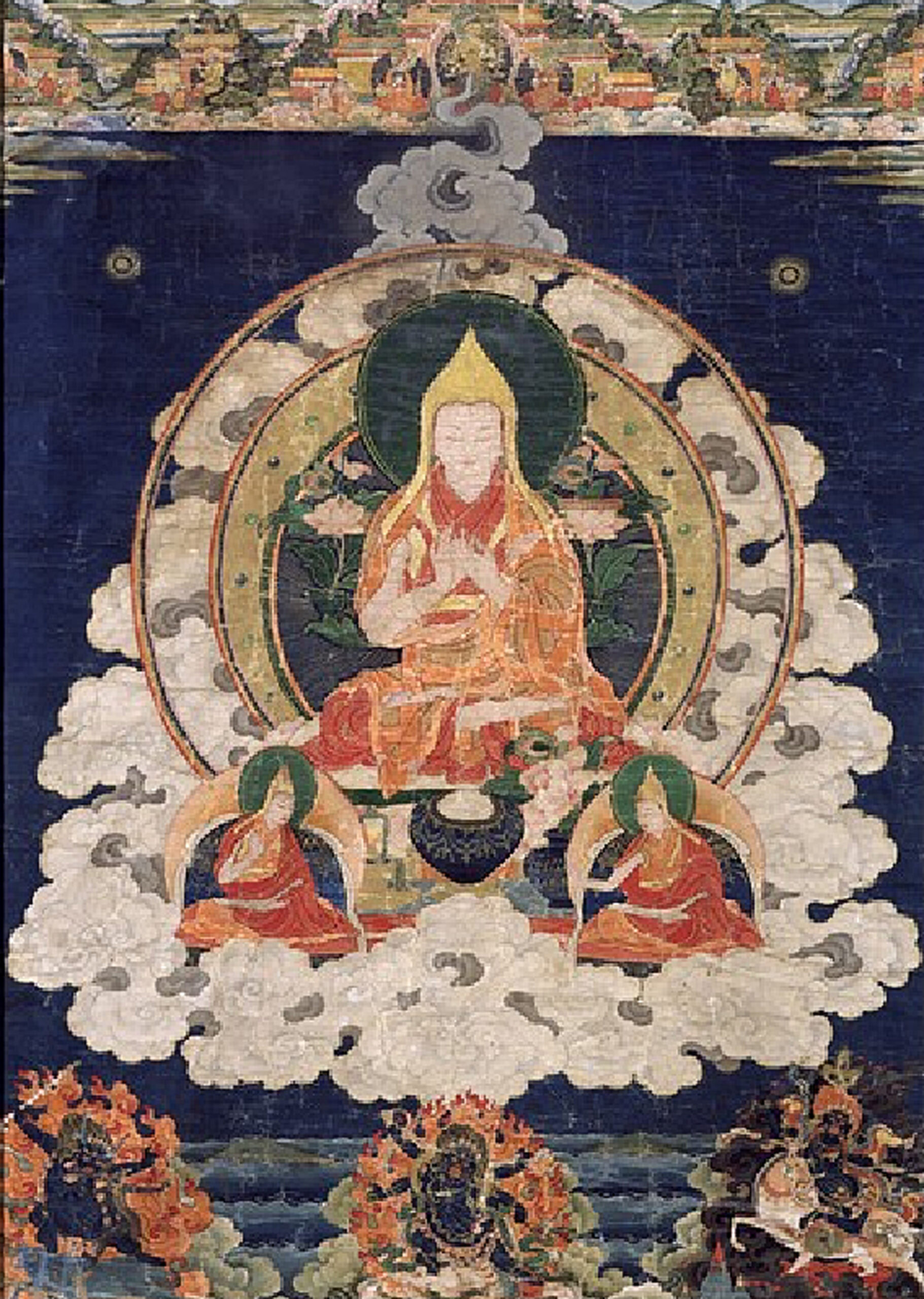
Courtesy of Himalayan Art Resources
The Three Principal Aspects of the Path
A famous text summarizing the key points of Buddhist practice.
The Three Principal Aspects of the Path (Tib. ལམ་གཙོ་རྣམ་གསུམ་) is a short text by Je Tsongkhapa Lobzang Drakpa, in which fourteen verses highlight the three most important aspects of Mahayana Buddhist practice: renunciation of samsara or the determination to be free from it, bodhicitta, and wisdom.
Je Tsongkhapa Lobzang Drakpa
Je Tsongkhapa Lobzang Drakpa (1357–1419) was an influential Tibetan Buddhist monk, philosopher, and tantric yogi. He studied with eminent teachers of various traditions, including the famous Sakya tradition lama Rendawa Shönu Lodrö and the Dzogchen master Lhodrak Namkha Gyaltsen. During his lifetime he spent many long periods in meditation retreat. Although he lived simply as a monk, he was known as a great scholar and meditator throughout Tibet and China. He wrote a total of 210 treatises. He placed great emphasis on the combination of the sutra and tantra paths, and especially on the union of the Madhyamaka view with the practice of Highest Yoga Tantra. His activities led to the formation of the Gelug tradition of Tibetan Buddhism.
The Czech translation of this text can be found here. The English translation is available here.
Parting from the Four Attachments
A famous Tibetan teaching that summarizes the entire path to awakening according to the sutra tradition in four sentences
This famous teaching belongs to the category of Buddhist teachings known as mind training (lojong). It has been transmitted, studied, and practiced for almost 1,000 years, and hundreds of commentaries have been written on it. The great bodhisattva Manjushri directly transmitted it to the famous Sachen Kunga Nyingpo. He told him:
"If attached to this life, you are not a dharma practitioner;
If attached to the three realms, you have no renunciation;
If attached to your own self-interest, you have no bodhicitta;
If there is grasping, you do not have the view."
"Jsi-li připoután k tomuto životu, nejsi duchovní praktikující.
Jsi-li připoután k samsáře, nerozhodl ses osvobodit se.
Jsi-li připoután ke svým zájmům, nemáš bodhičittu.
Vyvstane-li dualistické chápání, nemáš správný náhled."
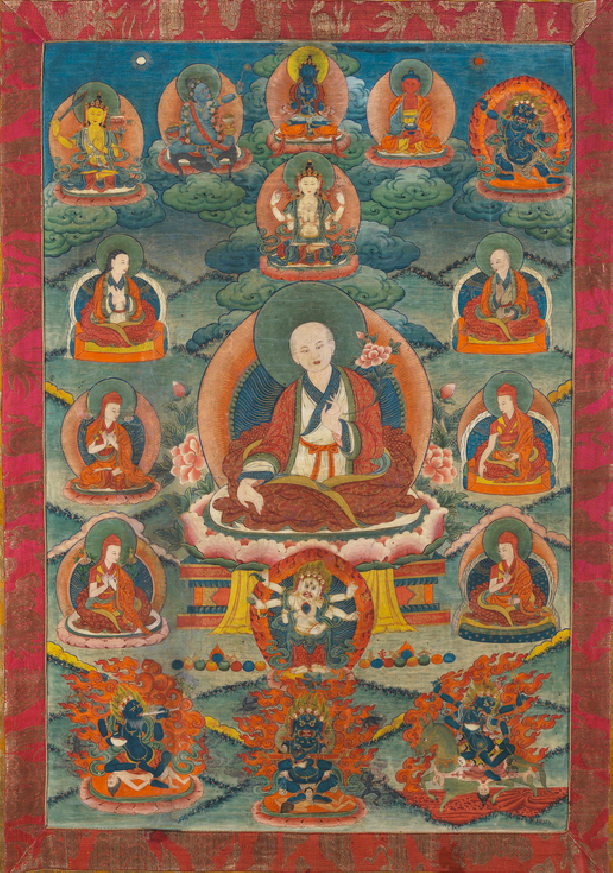
Sachen Kunga Nyingpo
Sachen Kunga Nyingpo (1092–1158) was the first of the five patriarchs and founders of the Sakya tradition and the third Sakya Trizin. He was the son of Khön Könchok Gyalpo, who founded Sakya Monastery in 1073. Sachen Kunga Nyingpo received teachings from many great masters of his time and, in his visions, from many mahasiddhas as well. He brought the precious Lam Dre teaching and the practice of Mahakala to the Sakya tradition. He wrote a great number of commentaries and instructions on practices.
Courtesy of Himalayan Art Resources